ATTRACTION
Süleymaniye Mosque
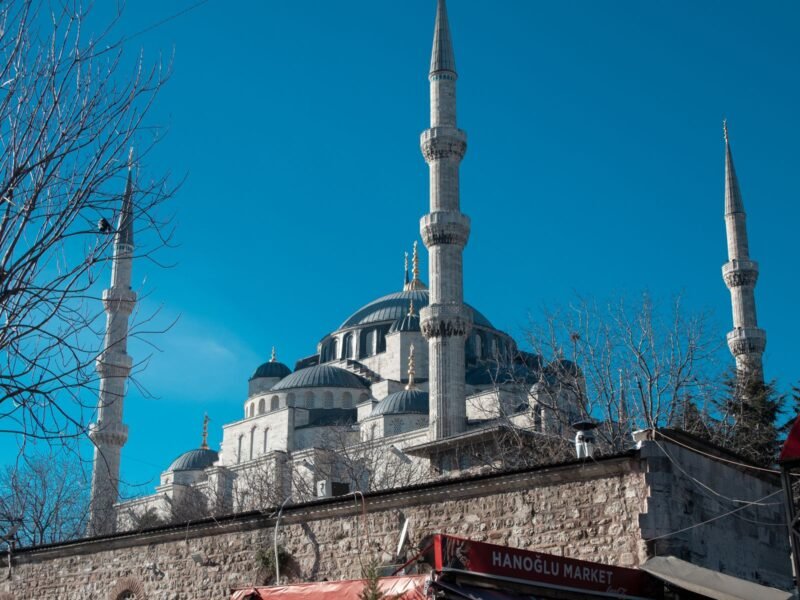
Süleymaniye Mosque is Mimar Sinan's 1557 Ottoman imperial mosque on a hilltop above the Golden Horn…
Read more →
Destinations / Pamukkale
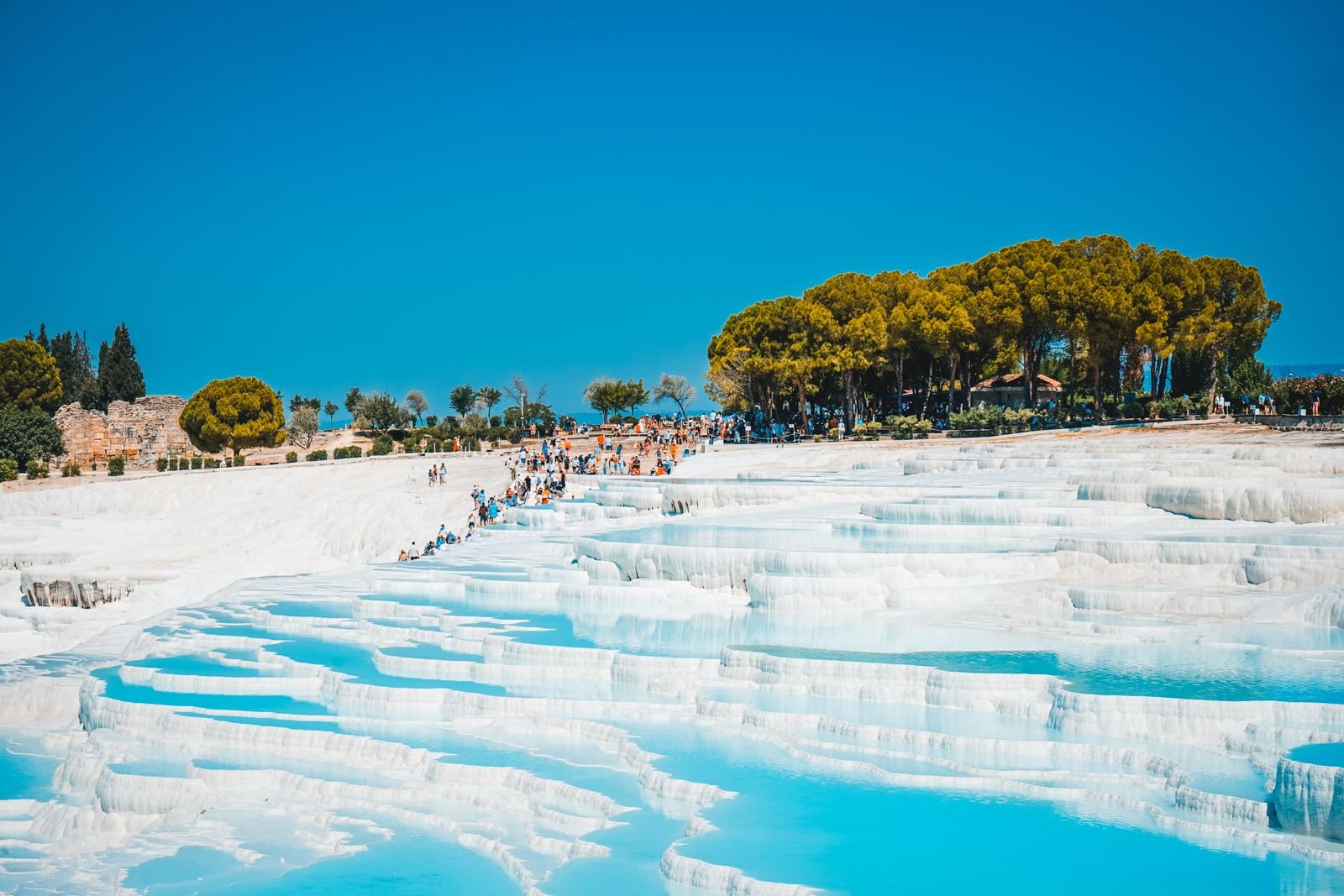
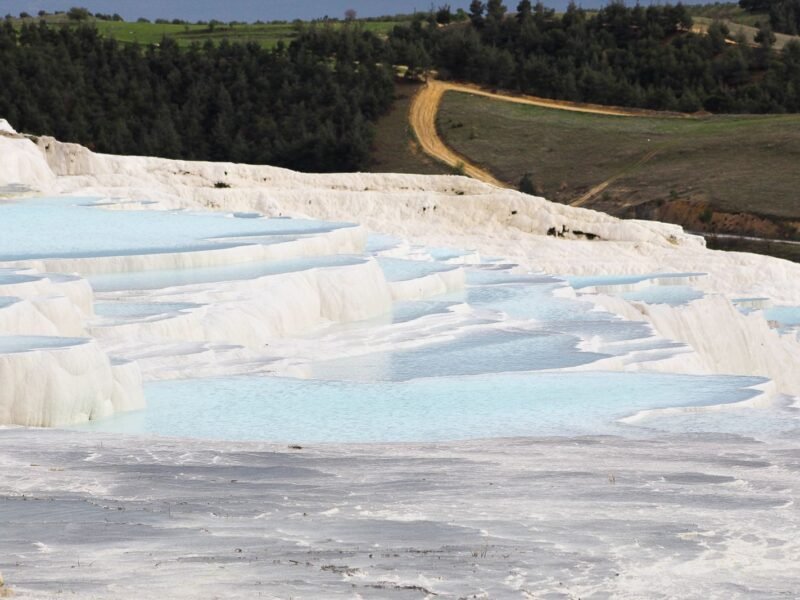
Pamukkale is a UNESCO World Heritage site in southwestern Turkey known for white travertine terraces formed by thermal springs, paired with the ancient Greco-Roman city of Hierapolis.
 Aegean (Denizli Province)
 | Tier | From |
|---|---|
| Budget | $25+ / night |
| Mid-Range | $75+ / night |
| Comfort | $160+ / night |
 Natural Site
  Ancient Ruin
  Natural Site
  Natural Site
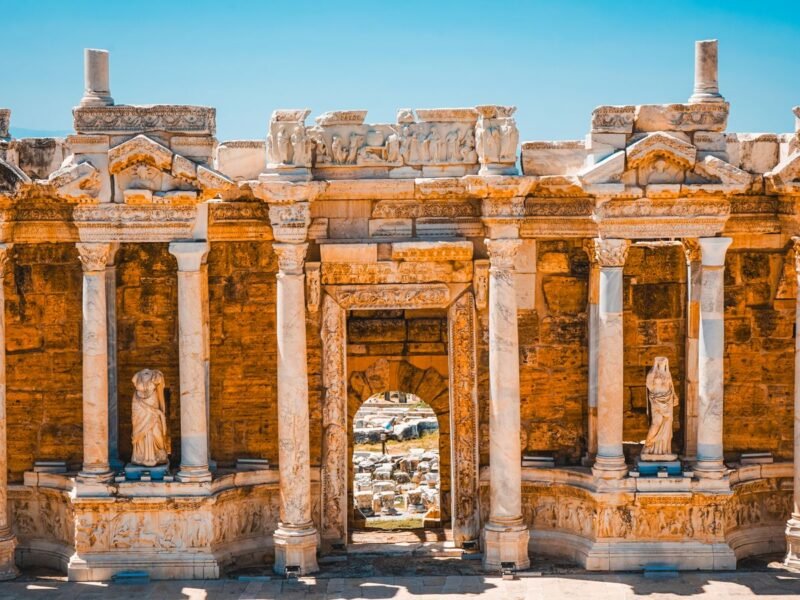
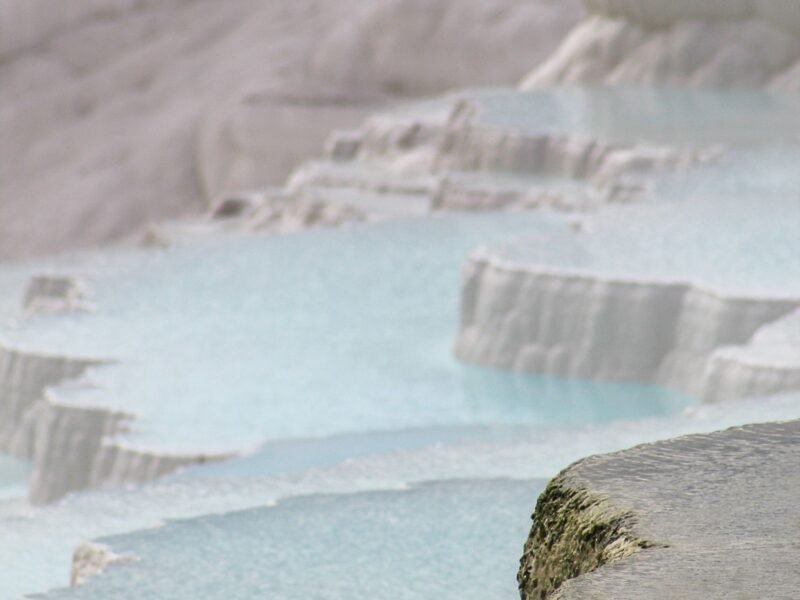
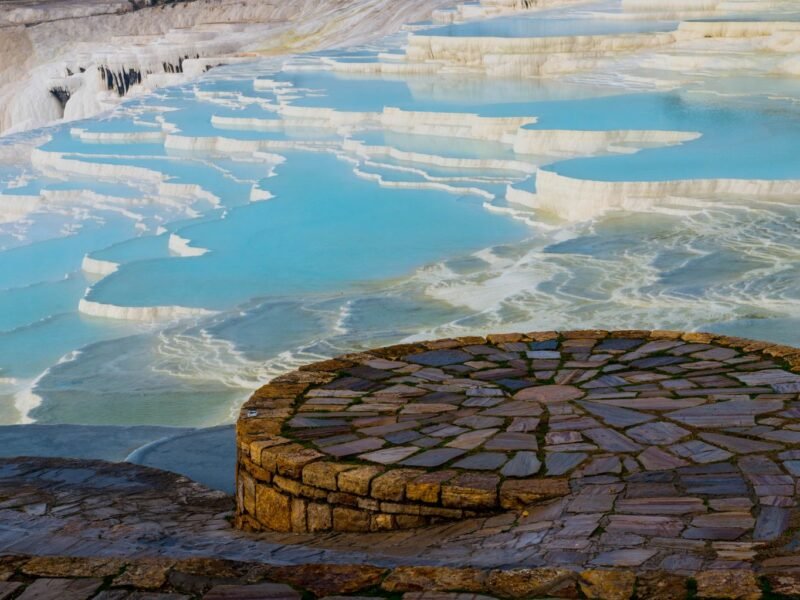
 Pamukkale Travel Guide — Pamukkale is a UNESCO World Heritage site in southwestern Turkey’s Denizli Province, known for white travertine terraces formed by mineral-rich thermal springs cascading down a hillside, paired with the ruins of the ancient Greco-Roman spa city of Hierapolis directly above them. “Pamukkale” means “cotton castle” in Turkish, describing the terraces’ distinctive white appearance.
Pamukkale is a small town rather than a city — most visitors base themselves here for one or two nights specifically to see the terraces, rather than as a broader regional hub. The travertine terraces and Hierapolis ruins sit on the same plateau, accessed through three gates: the South Gate and North Gate at the top of the plateau near Hierapolis, and the Pamukkale town entrance at the base of the terraces themselves. Karahayit, a smaller village a short drive away, has its own red-tinted thermal springs and mud baths, a common half-day add-on. Most travelers see Pamukkale as a day trip or overnight stop between Denizli’s other Aegean-region attractions, since there isn’t a large city’s worth of separate neighborhoods to explore beyond the terraces and ruins themselves.
Staying overnight in Pamukkale village lets you visit the terraces at opening time before tour buses arrive, and gives access to Cleopatra’s Pool and Hierapolis without a rushed day-trip schedule.
[/dt_tip>
Pamukkale has a hot, dry Mediterranean-influenced climate inland, with the terraces themselves comfortable to walk in cooler months and genuinely hot underfoot in peak summer.
| Season | Months | Weather | What to expect |
|---|---|---|---|
| Spring | Apr–May | 15–25°C (59–77°F) | Comfortable walking temperatures, one of the best windows for the terraces and Hierapolis together |
| Summer | Jun–Aug | 28–36°C (82–97°F) | Hot and dry; the travertines can get uncomfortably warm underfoot at midday, and site hours extend to accommodate crowds |
| Autumn | Sep–Oct | 20–29°C (68–84°F) | Warm but more manageable than summer, thinner crowds |
| Winter | Nov–Mar | 5–14°C (41–57°F) | Cold enough that the warm travertine water feels genuinely pleasant against cool air; shorter site hours |
Pamukkale is a small town with less reliable coverage than major cities — activate an eSIM through a provider like Airalo (#affiliate-airalo) before arriving rather than relying on finding a local shop.
The nearest airport is Denizli Çardak Airport (DNZ), about 65km from Pamukkale, with limited domestic flight connections. Most visitors arrive by intercity bus from Izmir, Antalya, or other Aegean cities, or as part of an organized day-tour package from further afield including Marmaris, Bodrum, Fethiye or even Antalya, given how far those distances actually are.
Pamukkale village itself is small and walkable. Reaching the plateau’s different gates requires a short taxi, dolmuş (shared minibus), or the free shuttle some hotels offer; a rental car gives flexibility for the short drive to Karahayit’s red springs.
Hierapolis was founded around 190 BC by Eumenes II of Pergamon, developing around the same thermal springs that formed the travertine terraces below, which the ancient city’s residents believed had healing and even mystical properties. The city passed through Roman and Byzantine rule, becoming an early center of Christianity — tradition holds that the Apostle Philip was martyred here, and a monumental tomb complex (Martyrium of St. Philip) was built on the site. A series of earthquakes, common to the region, eventually contributed to the city’s decline.
Pamukkale’s economy is built almost entirely around tourism to the terraces and thermal springs, so the town itself has a relaxed, visitor-oriented pace compared to Turkey’s larger cities. Modest dress isn’t required at the travertines themselves, though standard Turkish etiquette applies elsewhere in the village.
Regional specialties from Denizli Province.

A day trip covers the travertines and Hierapolis’s main sights, though staying overnight lets you visit the terraces before tour buses arrive and adds time for Cleopatra’s Pool without rushing.
No — shoes are actually prohibited on the travertines as of 2023 conservation rules; you walk barefoot, so bring a small bag to carry your shoes.
Yes — the two are entirely different: Pamukkale combines a unique white mineral-terrace landscape with genuine Greco-Roman ruins, while Cappadocia’s appeal is volcanic rock formations and cave architecture.
It’s roughly 3-4 hours by road from Antalya, Marmaris or Bodrum, making it a long but common day-trip or overnight add-on from any of those bases.
Süleymaniye Mosque is Mimar Sinan's 1557 Ottoman imperial mosque on a hilltop above the Golden Horn…
Read more →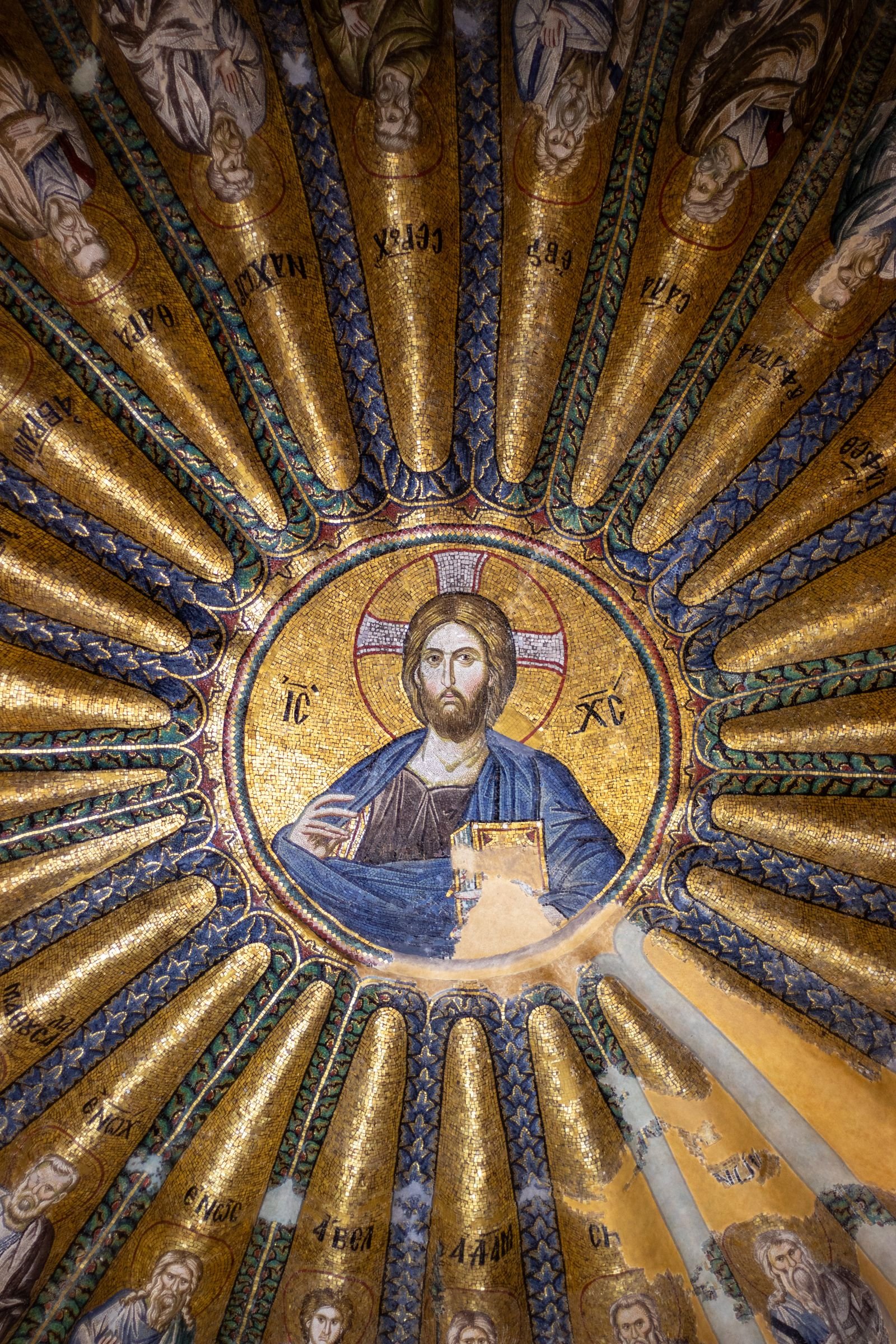
Chora Church (Kariye Mosque) in Edirnekapı holds some of the finest surviving Byzantine mosaics in the…
Read more →Dolmabahçe Palace is a 19th-century Ottoman palace on the Bosphorus in Beşiktaş, the last residence of…
Read more →
Comments