
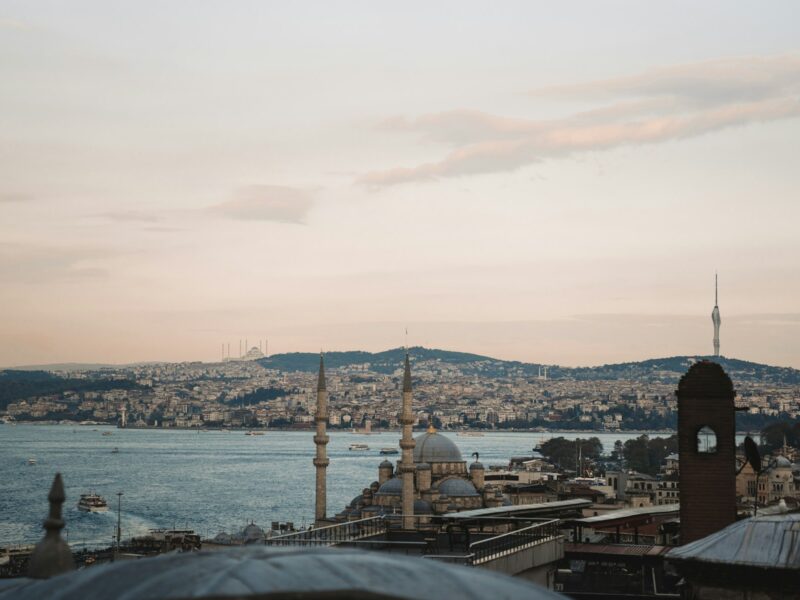
NOTE
Blue Mosque
Why visit Blue Mosque? Built between 1609 and 1616 for Sultan Ahmed I, the…
Read more →
Turkey / Pamukkale / Hierapolis Ancient City
Hierapolis is a Greco-Roman spa city built directly above the Pamukkale springs in the second century BC, now a UNESCO World Heritage site sharing a single ticket with the travertine terraces below.

The city existed because of the water. Romans came to bathe in the thermal springs on medical advice, and the settlement grew into a wealthy resort with a theatre seating twelve thousand, colonnaded streets, and one of the largest ancient cemeteries in Anatolia — a consequence of so many people arriving already ill. The theatre is the standout, with much of its stage building still standing and carved reliefs intact. Walking the necropolis afterwards is oddly affecting: tomb after tomb of people who travelled here hoping the water would cure them. Most visitors treat Hierapolis as an add-on to the terraces and give it twenty minutes, which is a mistake.
Included in the combined Pamukkale ticket at around $30 — there is no separate charge. Same hours as the terraces, 06:30–21:00 in summer and shorter in winter.
Enter through the North Gate to start at the theatre and walk downhill to the terraces, or walk up from the terraces if you came through the South Gate. The full crossing takes about 25 minutes on foot.
Yes — one ticket covers both the terraces and the ancient city above them.
Ninety minutes to two hours to see the theatre, main street and necropolis without rushing.
One of the best preserved in Turkey, seating around twelve thousand, with much of the carved stage building still standing.
Prices and availability are handled by the ticket provider — we just point you there.
Why visit Blue Mosque? Built between 1609 and 1616 for Sultan Ahmed I, the…
Read more → Why visit Topkapi Palace? Topkapi is less a single building than a small city…
Read more →
Why visit Göreme Open-Air Museum? This was a working monastic settlement from roughly the…
Read more →
Comments